

Examples of real-world
drone applications
-
Safety and Emergency Response – Supporting search and rescue, disaster response, and real-time situational awareness while reducing risk to human responders.
-
Public Health and Medical Logistics – Delivering medical supplies and enabling access to remote or hard-to-reach areas during emergencies.
-
Agriculture and Food Security – Precision agriculture, crop monitoring, site assessment, and improving resource efficiency and productivity.
-
Infrastructure and Urban Planning – Surveying, mapping, and supporting construction and development planning.
-
Environmental and Natural Resource Monitoring – Monitoring forests, ecosystems, wildlife, and environmental conditions.
Career Paths Related to Drones
Drone skills are no longer just an “additional skill,” but an important capability in modern data-driven industries. Drone technology connects multiple fields, including engineering, media production, agriculture, environmental monitoring, and infrastructure management.
Students and professionals can develop careers in areas such as surveying and mapping, aerial media production, specialized UAV operations, security applications, precision agriculture, and drone compliance and operational support for organizations that require legal and responsible drone use.
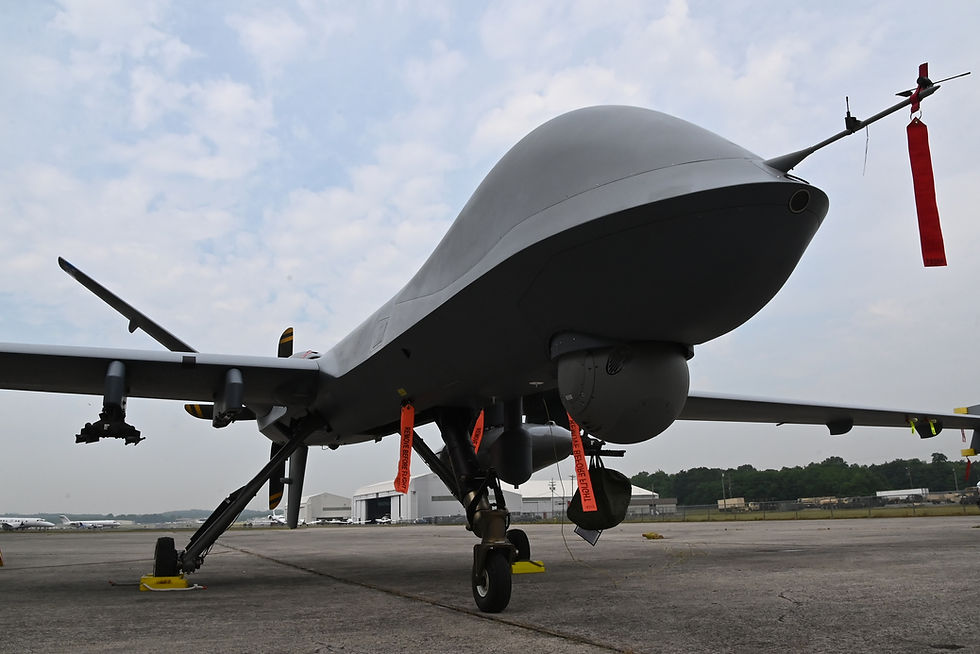
Security and Defense Sector
Drones play an important role in situational awareness, surveillance, and mission support, helping decision-makers operate with greater precision and continuity.
The key principle is responsible use in compliance with applicable laws and regulations.
Note: The content in this section is presented for general knowledge and technology awareness only. It does not constitute operational guidance.
Self-Development, Family Development,
and National Development
Regardless of the career path students choose in the future, beginning with a strong understanding of laws and safety principles helps develop discipline, responsibility, and sound decision-making skills applicable to both life and work.
Drone skills therefore represent more than the ability to fly. They reflect a future-oriented skillset that promotes systematic thinking, reduces errors, improves safety, and contributes to long-term benefits for families, communities, and the nation.

Learning approaches at DTTC (Overview)
-
Start with the fundamentals of safety and responsibility.
-
Understand the legal framework and operational limitations related to drone use.
-
Develop systematic thinking — plan before, during, and after each flight.
-
Select a career development path that aligns with the learner’s goals and professional context.